
China said that after this incident both sides are in communication and coordination on the matter through diplomatic and military channels.
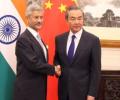
Wang said the two sides should follow the important consensus reached by the leaders of the two countries and strengthen the communication and coordination on the proper handling of the border situation through the existing channels so as to jointly maintain peace and tranquility in the border area, the Chinese foreign ministry said in a statement.
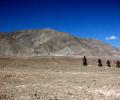
While the de-escalation process was underway, a violent face-off took place on Monday night between Indian and Chinese troops leading to the death of 20 Indian soldiers.
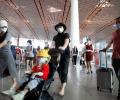
Starting Wednesday, Beijing halts return to campus, and resumes online courses for middle and primary school students, as well as suspends college students' return to campus, the reports said.
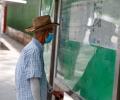
The Chinese capital reported 106 domestically transmitted COVID-19 cases since June 11 and a senior city official warned that the situation is "extremely severe" in Beijing where authorities have mounted massive containment measures including mass testing of about 90,000 people.
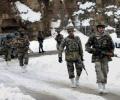
China has alleged that the Indian troops twice crossed the border line on June 15 for "illegal activities and provoked and attacked Chinese personnel" which led to serious physical conflict between the two sides, hours after the Indian Army said the violent face-off took place between the troops during the "de-escalation process" in the Galwan Valley.

"I am not aware of the information you provided," Chinese foreign ministry spokesman Zhao Lijian said in Beijing when asked about the reports of the Indian casualties at the contested borders. "Our border troops had a high-level meeting and reached important consensus on easing the border situation but astonishingly, on June 15, the Indian troops seriously violated our consensus and twice crossed the border line for illegal activities and provoked and attacked Chinese personnel which led to serious physical conflict between the two sides and China has lodged strong protest and representation with the Indian side," Zhao said.

The authorities have mounted massive containment measures including mass testing of about 90,000 people
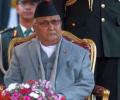
'The redrawing of the map with the inclusion of Kalapani area by Nepal and endorsement from the House of Representatives shows the KP Oli government's move to gain cheap popularity in the name of nationalism'

In a bid to stem the spread of the contagion, the authorities in Beijing have conducted the nucleic acid test on 29,386 people who had visited the Xinfadi wholesale market since May 30, Gao Xiaojun, spokesman for the Beijing Health Commission, said on Monday. The market became a hotspot after it reported several new COVID-19 cases. Out of all the samples, 12,973 came negative and the rest are awaiting results, Gao told the media.
China has reported 66 new coronavirus cases, the largest since the disease was controlled in its first epicentre Wuhan in April, prompting the authorities to go into a 'wartime' mode to stem the spread of COVID-19 in the capital Beijing which has seen a sudden spike in the number of infections, health officials said on Sunday.

India last month reacted angrily to Nepal showing the three areas as Nepalese territory in the new map and cautioned the country that saying such "artificial enlargement" of territorial claims will not be acceptable to it. India has been maintaining that these three areas belong to it.
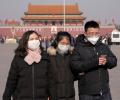
China's National Health Commission, (NHC) said on Saturday that 18 new confirmed coronavirus cases were reported in the country on Friday, including six domestically-transmitted cases in Beijing. Also on Friday, seven new asymptomatic cases were reported, taking the total number of such people in quarantine to 98, it said.
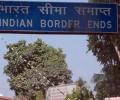
A house meeting has been scheduled for Saturday as per the Parliament's notice and the matter relating to the constitution amendment bill is likely to come during the meeting, parliamentary sources said. Meanwhile, in a conciliatory tone, India on Thursday said it deeply values its friendly ties with Nepal.
He claimed that India built a Kali temple, created 'an artificial Kali river' and 'encroached the Nepalese territory through deploying the Army' at Kalapani. The river defines the border between the two countries.
The ties between India and Nepal came under strain after defence minister Rajnath Singh inaugurated a 80-km-long strategically crucial road connecting the Lipulekh pass with Dharchula in Uttarakhand on May 8.
Asked about the reports of the troops on both sides disengaging and moving back to their previous positions, Chinese foreign ministry spokesperson Hua Chunying told a media briefing in Beijing that both sides are taking steps to ease the situation along the borders.
Mountain brigades being raised by India are mostly meant for the Chinese border, especially the Tibetan plateau, and it is perhaps the first time a Chinese military expert publicly complimented their strength and strategic importance.
China said the study was "ridiculous" and based on "superficial" information.
China and India have agreed to work to maintain peace along the Line of Actual Control and resolve the border standoff through talks while implementing the consensus reached between the two countries' leadership that 'differences' do not escalate into 'disputes', a top Chinese official said.
 © 2026 Rediff.com - Investor Information - Advertise with us - Disclaimer - Privacy Policy - Sitemap - Feedback - About us - Terms of use - Grievances